When people hear the words pelvic floor exercises they often think they are only necessary after a vaginal birth but in reality, every pregnancy places significant strain on the pelvic floor. 9 months of growing a baby puts a lot of extra weight and pressure on the pelvic floor, this is regardless of how your baby is delivered.
Whether you had a vaginal birth or a C-section, your pelvic floor needs attention during your postnatal recovery.
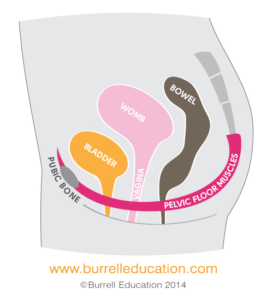
Your pelvic floor is a group of muscles that stretches like a hammock from your pubic bone to your coccyx. These muscles support your bladder, bowel and uterus, helping you to:
- Control your bladder and bowels.
- Support your pelvic organs.
- Improve core stability.
- Enhance sexual function.
- Work together with your diaphragm and deep abdominal muscles to support your spine.
Throughout pregnancy your pelvic floor works incredibly hard.
Over nine months it supports the growing weight of your baby, placenta and amniotic fluid. Pregnancy hormones also make your ligaments and muscles more elastic to prepare your body for birth. While this is completely normal it can leave the pelvic floor weaker afterwards.
Even if you had a planned C-section your pelvic floor has still carried the extra load throughout pregnancy.
Thinking your pelvic floor will be OK because you had a C-section is one of the biggest misconceptions in postnatal recovery.
A C-section avoids the stretching and potential injury that can occur during a vaginal birth, but it doesn’t protect the pelvic floor from the effects of pregnancy itself.
After a C-section you may find that:
- Your abdominal muscles have been weakened by surgery.
- Your core isn’t working as effectively.
- Pain around your scar changes the way you move and activate your muscles.
Your deep core muscles and pelvic floor work together, so rebuilding both is essential for a strong recovery.
You don’t have to experience symptoms to benefit from pelvic floor exercises, but common signs of weakness include:
- Leaking urine when coughing, laughing or exercising.
- Difficulty controlling wind.
- A feeling of heaviness or dragging in the pelvis.
- Reduced core strength.
- Difficulty returning to running or higher-impact exercise.
If these symptoms persist, it’s worth speaking to a women’s health physiotherapist.
How to perform pelvic floor exercises
Think about gently squeezing and lifting the muscles around your vagina and back passage, as though you’re trying to stop yourself passing urine and wind at the same time.
As you lift the Pelvic Floor muscle exhale and hold the muscle lift until the end of your natural breath
Try not to:
- Hold your breath.
- Squeeze your buttocks.
- Tense your shoulders.
- Brace your tummy excessively (this will happen naturally with your breath).
Aim for both:
- Slow holds: Hold for up to 10 seconds before relaxing completely or to the end of your natural exhale.
- Quick squeezes: Contract and release your muscles quickly whilst performing quick exhales.
These exercises will improve your muscles’ ability to react during coughing, sneezing and jumping.
Quality is much more important than quantity.
In most uncomplicated pregnancies and births, gentle pelvic floor exercises can begin within the first few days after birth, even after a C-section, as long as they are comfortable and your healthcare team hasn’t advised otherwise.
These early contractions encourage blood flow, help reconnect with the muscles and support recovery.
Pelvic floor exercises aren’t just for the early weeks
Many women stop thinking about their pelvic floor after their six-week check, but these muscles need ongoing training just like any other muscle in your body.
As you progress to walking, strength training, running or returning to sports, a strong pelvic floor becomes even more important.
Pregnancy changes your body, but it doesn’t mean you have to accept bladder leaks, pelvic heaviness or poor core strength as “just part of being a mum.”
Whether you gave birth vaginally or by C-section, strengthening your pelvic floor is one of the most valuable things you can do for your long-term health and confidence.
Small, consistent exercises each day can make a big difference. Not only for your recovery now but for years to come.
Your body has done something incredible. Give it the care and rehabilitation it deserves and needs.
If you are unsure you are doing the exercises correctly or something doesn’t feel right, please seek the help of a Women’s Health Physiotherapist.